- facebook (opens in new window)
- twitter (opens in new window)
- linkedin (opens in new window)
- nextdoor (opens in new window)
- email (opens in new window)
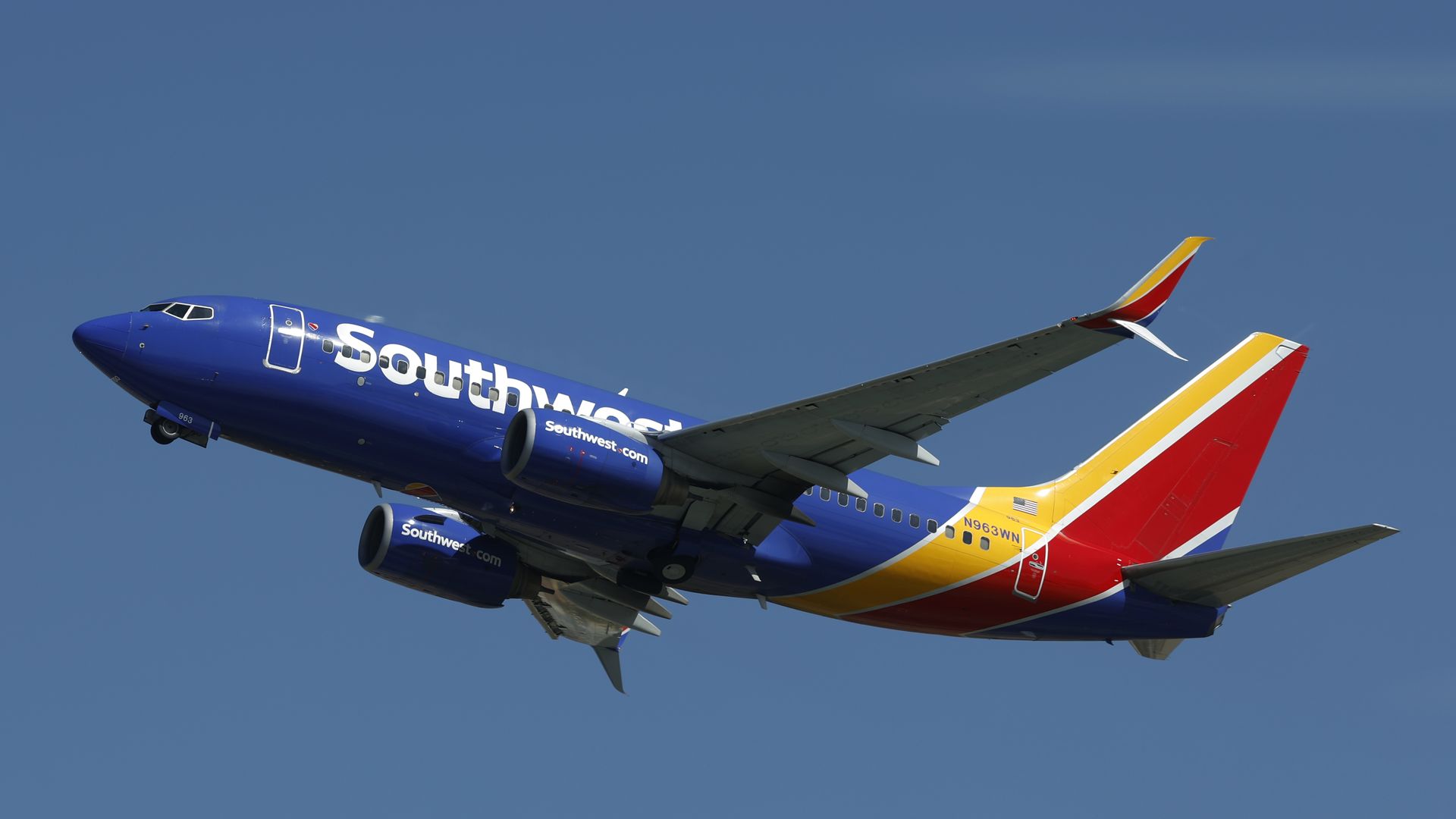 Southwest Airlines is overhauling the way it does business. Photo: Kevin Carter/Getty Images
Southwest Airlines will start charging for checked bags, upending a long-standing policy and putting the carrier more in line with other major domestic airlines that prioritize business class customers.
Why it matters: Southwest has long marketed itself by promising “no change fees,” “bags fly free” and “flight credits don’t expire.”
- But the Dallas-based company has been steadily changing its business model since an activist hedge fund invested nearly $2 billion in the airline’s stock last year.
The latest: The airline announced Tuesday that bags will no longer fly free and flight credits will expire after a year. The changes take effect May 28.
- The carrier has also restructured its loyalty points program, increasing points earned from business class fares and reducing points earned from “wanna get away” fares.
How it works: Business select fares and A-list preferred frequent flyers will still get two free checked bags.
- Southwest credit card holders will get one free checked bag. Baggage fees will be added to first and second checked bags for all other customers.
- The airline hasn’t said what the fees will be.
Flashback: Southwest was founded as the “airline with heart,” committed to an employee-first culture and offering one class of service to all customers.
- Following that model, Southwest was profitable for 47 consecutive years until COVID sidelined air travel.
Catch up quick: Investor Elliott Management started calling for an overhaul of Southwest’s board in July. The airline has since announced several major changes to how it does business.
- Last July, Southwest announced it would end open seating, instead adopting assigned seating and premium seating with extra legroom. It remains unclear when the new policy will be implemented.
- Last month, the airline started offering red-eye flights.
Between the lines: The seating changes may end up costing Southwest. Its open boarding process is meant to quickly load and unload passengers, allowing the carrier to run more flights.
- Seating with extra legroom may actually cut into the space between rows in the rest of the plane, which could upset longtime customers.
Threat level: Southwest also appears to be moving away from its employee-first model.
- The company cut 15% of its corporate workforce in February, laying off more than 1,700 people from its Dallas headquarters. It was the first mass reduction in company history.
The bottom line: Longtime CEO Herb Kelleher likely wouldn’t recognize the airline he co-founded. He once said Southwest’s success had everything to do with its culture.
- “My competitors can copy everything … but they can’t copy our culture, and they know it,” Kelleher once said at a Fortune conference.
- facebook (opens in new window)
- twitter (opens in new window)
- linkedin (opens in new window)
- nextdoor (opens in new window)
- email (opens in new window)

Get more local stories in your inbox with Axios Dallas.

