Follow live coverage of the final round of the 2025 Masters
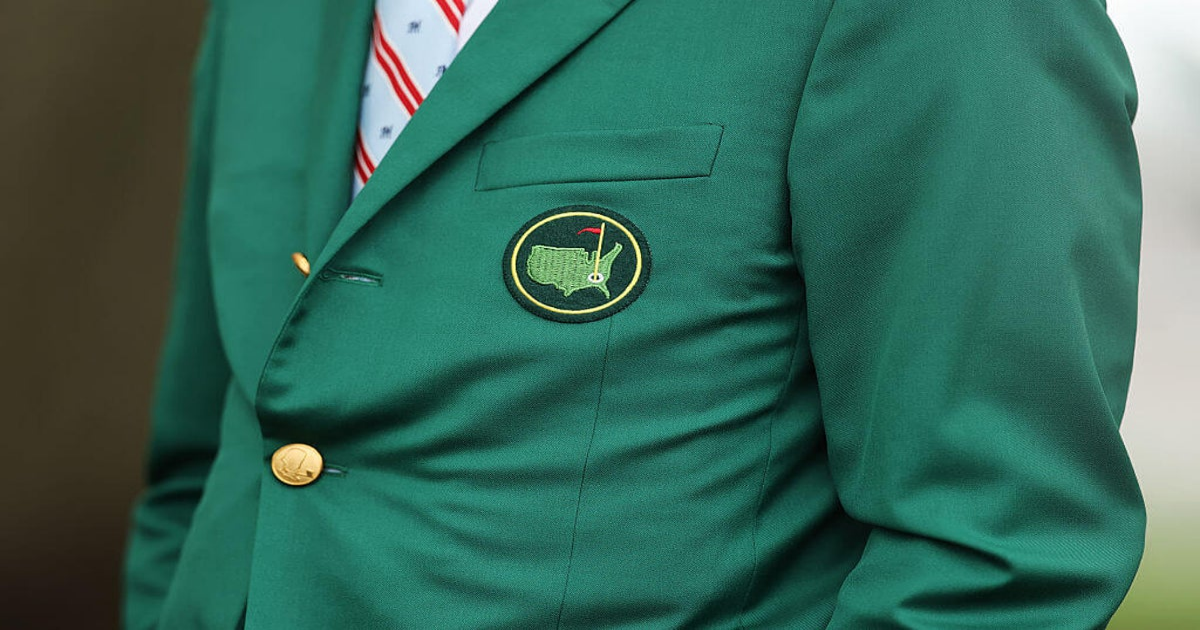
The “value” of a green jacket presented to the winner of The Masters can vary depending on who you ask.
Some will say it’s priceless, as it represents entry into one of the most exclusive clubs in all of sports. Others will say it jumps annually since the purse for the champion increases. For example, last year’s crown holder Scottie Scheffler secured a check for $3.6 million while securing his second green jacket. (Although repeat winners technically do not get multiple jackets for multiple wins — after all, you can only wear one.) And still others will point to previous sales of the few that have made it to the secondary market over the years. If sold in an auction platform, green jackets could command values into the seven digits depending on the player it was awarded to, given the scarcity of the item.
But it also might cost someone their freedom.
Although the tournament was first played in 1934, the first green jacket wasn’t awarded to the winner until 1949, when Sam Snead notched his first of three Masters victories. Before that, green jackets were worn to help visitors easily identify knowledgeable Augusta National members, an idea golf legend and Masters co-founder Bobby Jones took from the practice of club captains in England wearing matching jackets. Once the green jacket became a reward for winning, they were retroactively awarded to previous winners.
Since 1967, green jackets have been made by the secretive Hamilton Tailoring Company based in Cincinnati. The name of the person it was made for is stitched onto a label inside the jacket.
In 2010, Augusta National declared ownership of the green jackets for Masters champions and club members, though. Now, a Masters champion can essentially borrow the jacket for one year after the win and return it to the club at the following year’s tournament, where they are then able to wear it whenever they’re on the grounds of Augusta National.
It’s a similar situation for the famous white jumpsuits worn by caddies at The Masters. They can’t be kept, but the caddie of the winning golfer can send a letter to tournament organizers requesting it and the jumpsuit will then be sent to them as a memento of the win, according to The Masters official website.
These rules didn’t stop the sale of green jackets after the club’s edict, though.
Golden Age Auctions, previously known as Green Jacket Auctions, has sold numerous Augusta National green jackets after the declaration, including three Masters champion green jackets.
In one of the highest sales in the auction house’s history, Horton Smith’s green jacket for his wins in 1934 and 1936 sold through the platform for $682,229 in 2013. Two other champions’ jackets sold for much lower, though. The green jacket for Doug Ford, the 1957 Masters champ, sold for $62,967 in 2010 and 1959 Masters winner Art Wall’s jacket went for $61,453 in 2012.
The second highest green jacket sale occurred thanks in part to the wild story behind its discovery.
A Masters champion green jacket somehow landed in a pile of old blazers at a Toronto thrift store, where a customer realized what it was and bought it for $5. The discovery of the jacket became public in 1994, according to several reports through the past decades, although the identity of the lucky shopper was never released. The name of the jacket’s original owner was cut out of the inside label, but other tags helped experts date it to the early 1950s. Golden Age sold the “thrift store jacket” for $139,348 in 2017.
According to Golf Digest, Augusta National sued the auction house in 2017 over the “Green Jacket Auctions” name along with the right for the business to sell particular pieces of club memorabilia.
The “thrift store green jacket” was the last one sold publicly.

“Augusta National believes that even if a champion has possessory rights to it, Augusta National owns that jacket,” said Ryan Carey, president and founder of Golden Age. “And so they do not want them being resold in the public market because they believe they own them. Whether the champion is allowed to maintain it or whatever, that is their position on green jackets. So that is different than traditional trophies and things like that.
“The Academy Awards have something pretty similar with the Oscars where the Oscar trophy, they obviously hand it to the actor that wins, but the Academy maintains ownership of it because they didn’t like them being sold or people monetizing. They didn’t think it would look good for the brand. Augusta National is very similar to that. And so we agreed to respect their wishes there. So we will not publicly sell any more green jackets even though we have in the past.”
A potential private sale for Arnold Palmer’s Masters green jacket had been discussed in 2022 for $3.65 million, according to Golf Digest. But the FBI intercepted the item at the drop-off point for the jacket in a sting operation.
Palmer’s jacket had been stolen in part of a decade-long Masters merchandise and memorabilia heist by a former Augusta National employee. Richard Brendan Globensky received a 12-month prison sentence in March after pleading guilty to stealing items from the club valued at an estimated $5.3 million.
The price discussed for the Palmer jacket at the drop-off point stood at $1.65 million. Then the buyer allegedly arranged a sale after his purchase with someone else for the near $4 million price tag.
With the rules well established by the club surrounding ownership of Augusta National’s rye green blazers, there’s little chance a Masters green jacket will permanently leave the golf course grounds ever again. This would have to increase the value of the near $700,000 Smith jacket. Any public sale likely would be contested by Augusta National, though, leaving the value of any green jacket to escape in question.
The Athletic maintains full editorial independence in all our coverage. When you click or make purchases through our links, we may earn a commission.
(Top photo: Michael Reaves / Getty Images)