 GETTY IMAGES
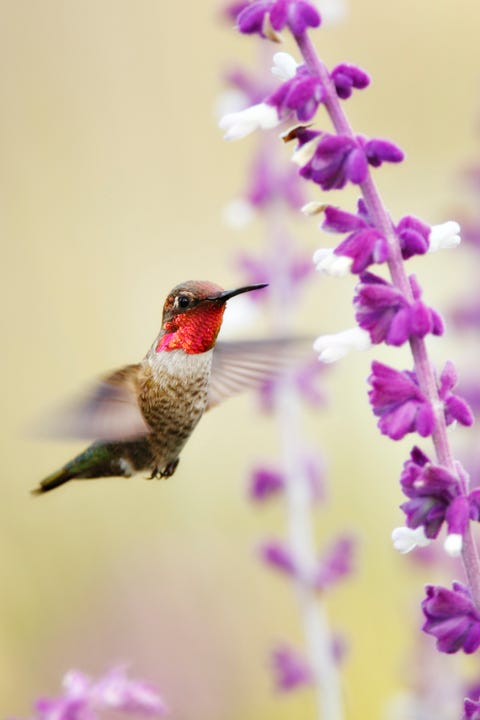
They’re nicknamed “hummers.”
A hummer is not only a disconcertingly large personal vehicle seen on the road, but also a colloquial way birders use to refer to their hummingbird coteries. “I saw my hummers today” would be an appropriate way to describe your regular visitors, according to LeBaron.
 GETTY IMAGES
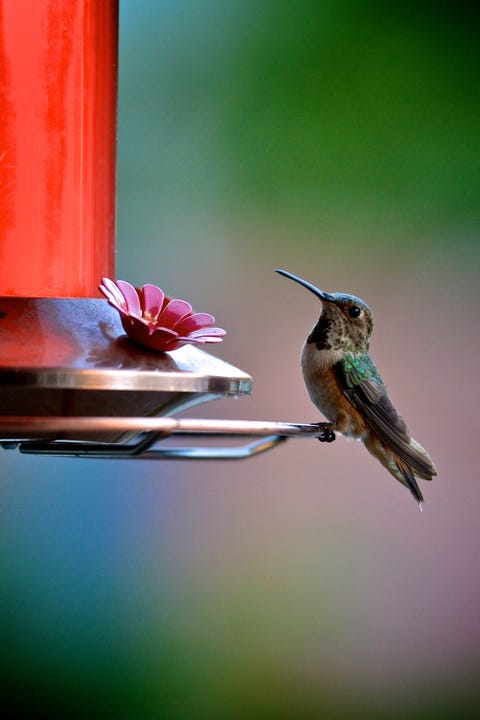
Yes, you can have “your” hummers.
LeBaron says hummingbirds choose their favorite locations based on geography, as well as a combination of natural nectar sources and well-placed feeders.
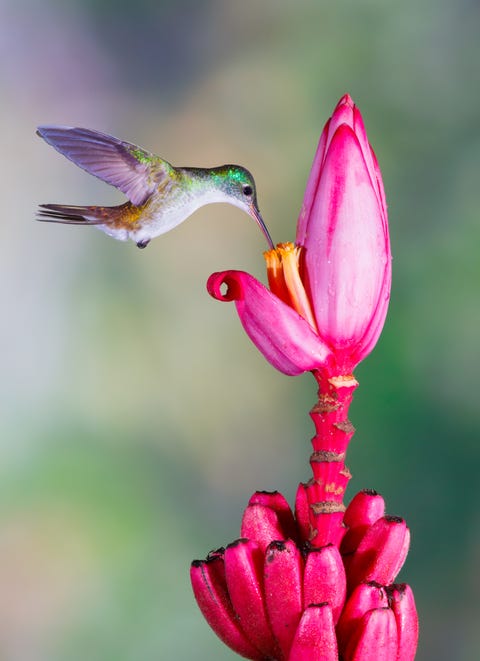
They have amazing memories.
 GETTY IMAGES
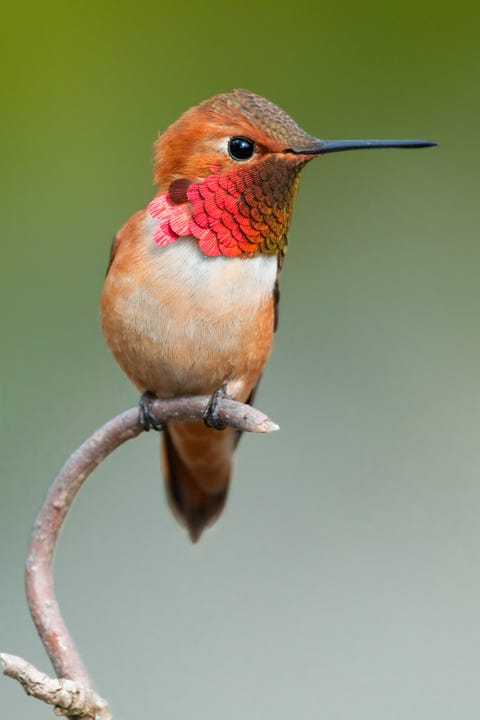
They can fly thousands of miles every year.
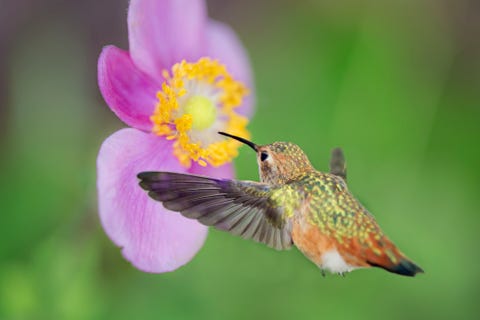
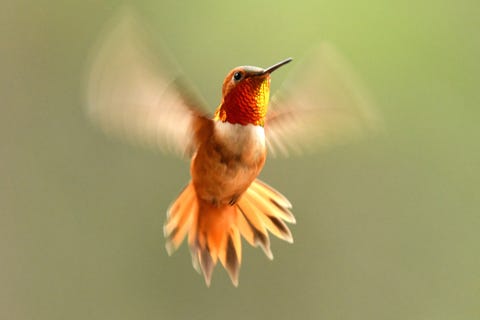
In terms of migratory feats, hummers go the farthest of any bird in proportion to body length, according to LeBaron. For a 2.5-inch hummingbird, the few thousand miles traveled between breeding grounds and winter habitats is positively huge. The rufous hummingbird (pictured) has the longest migration of any hummingbird species. Their annual trek covers more than 3,000 miles from Alaska and Canada to southern Mexico.
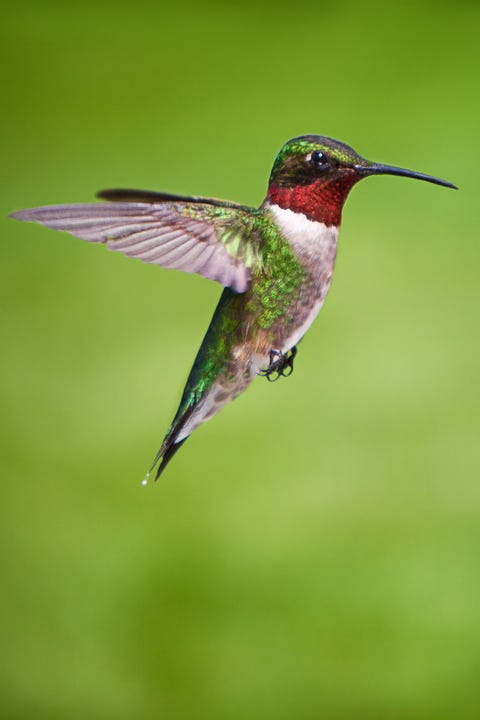
They can travel 500 miles in a single go.
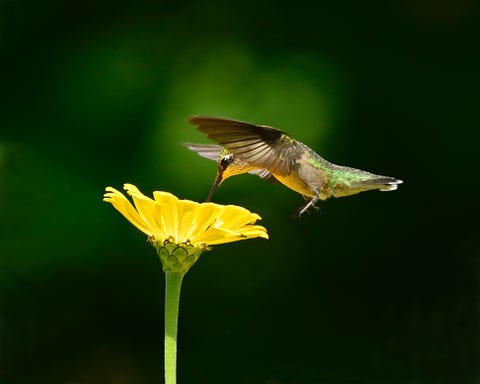
LeBaron says some ruby-throated hummingbirds (pictured) fly 500 miles nonstop across the Gulf of Mexico during both spring and fall migrations. Others will stick to the coast and travel the longer route down the edge of Texas instead.
 DAVID NORTHCOTT//GETTY IMAGES
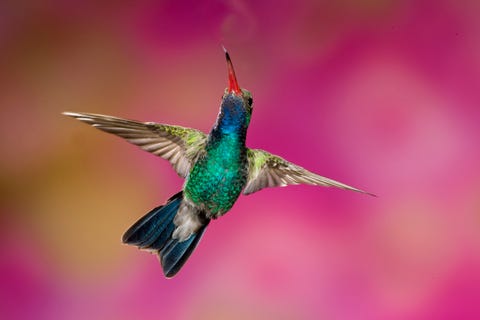
Hummers are diurnal.
Meaning most are awake during the day and sleep at night. That being said, these special birds can migrate regardless of the time of day.
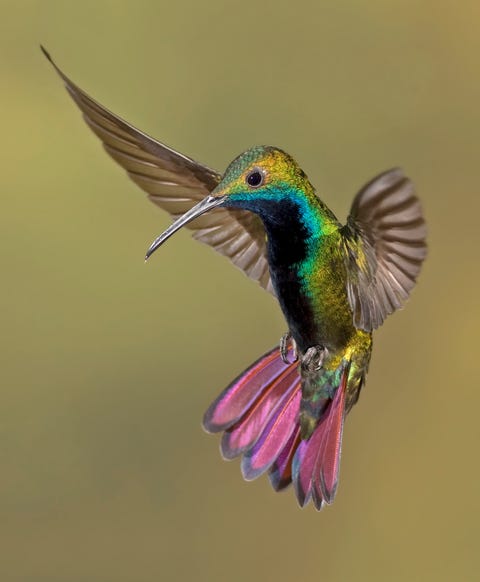 IMAGE BY DAVID G HEMMINGS//GETTY IMAGES
 GETTY IMAGES
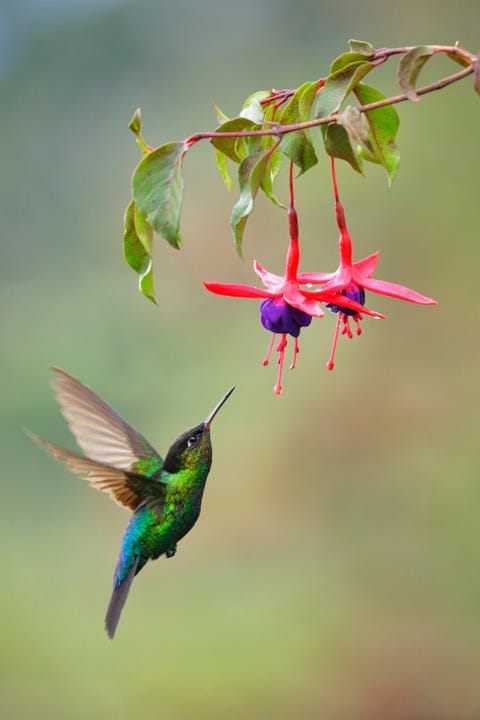
They love sugar.
Hummingbirds go straight for the glucose, says LeBaron. They can eat more than twice their body weight daily, visiting a hundred or more flowers to do so. Because of their economical proportions and an incredibly high metabolism, these excellent pollinators can’t store fat like warblers and other small birds.
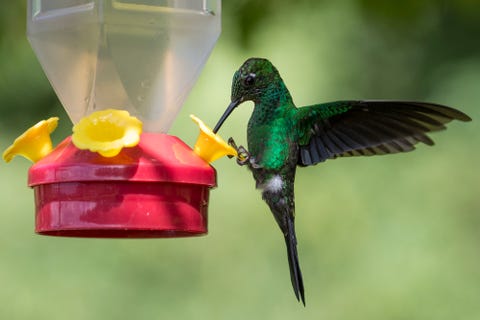
Don’t add dye to their food.
Natural nectar is clear, so it’s not a necessary ingredient and there’s some debate over whether food coloring could harm birds. To refill you bird feeder, LeBaron says to make your own sugar water by boiling four parts water mixed with one part refined white sugar. DIYing instead of buying insures no added colors or chemicals. Other sweeteners like honey and brown sugar go rancid faster and can make hummingbirds sick.
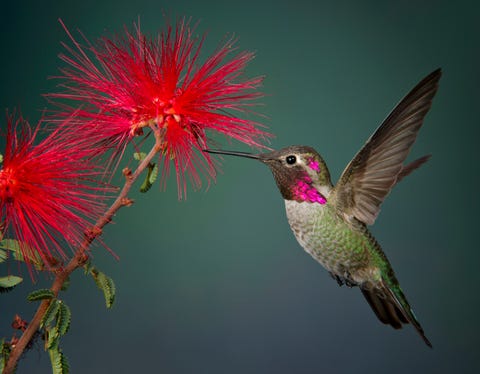 KATHLEEN REEDER WILDLIFE PHOTOGRAPHY//GETTY IMAGES
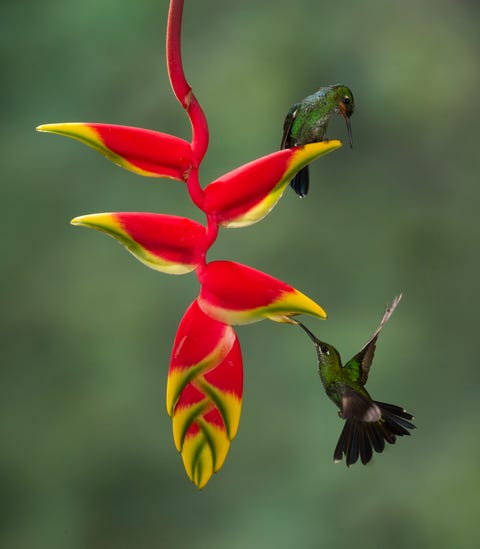
They are attracted to the color red.
However, it’s a myth that hummingbirds will only feed on red flowers.
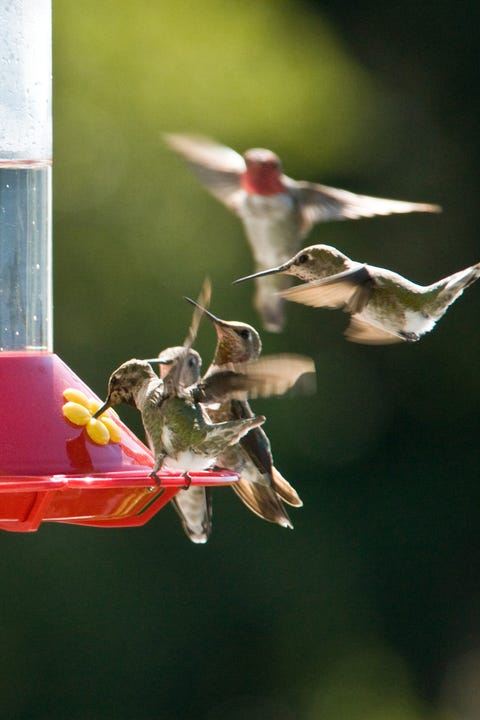
Hummingbird feeders need frequent cleaning.
Yes, there is some upkeep involved. Bird feeders should be cleaned thoroughly every week with a vinegar-water solution, a task that can become quite time-consuming.
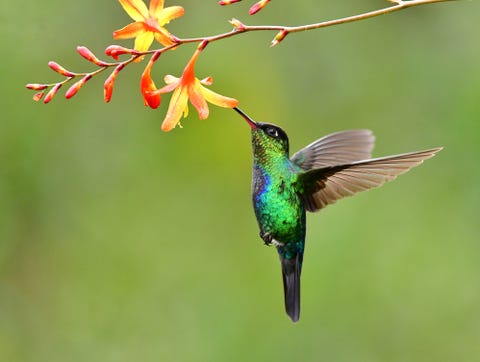 JEFF R CLOW//GETTY IMAGES
They eat insects.
Because of their quickness and the shape of their beaks — which act like “spring-loaded sets of chopsticks” — hummingbirds can snatch insects right out of the air.
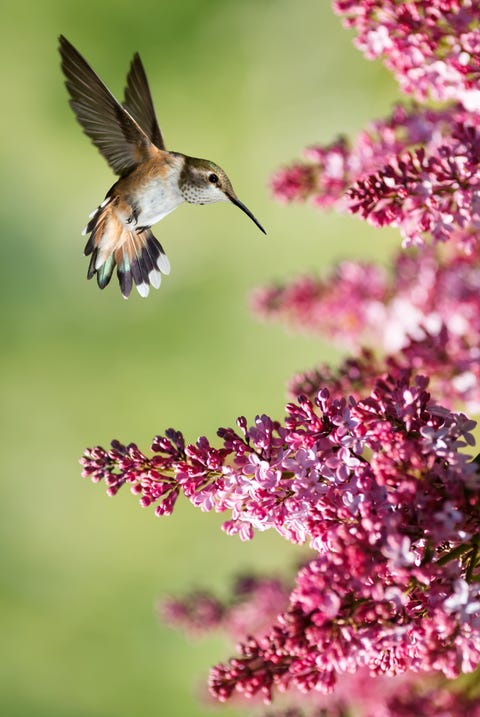
They love certain flowers.
If you want to attract hummingbirds to your yard, plant different types of blooms that flower during the entire period when hummers may appear. Landscaping with native species serves both the birds and the ecosystem. You can find out about planting in your region here.
 SUSANGARYPHOTOGRAPHY//GETTY IMAGES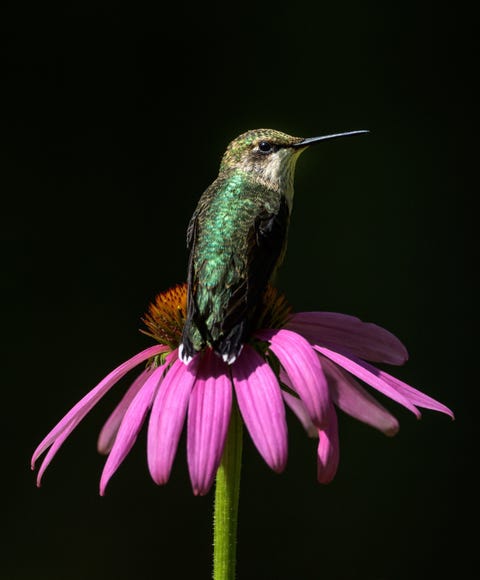
They prefer natural nectar to feeders.
Natural nectar is the key to a healthy diet for these birds — so they’ll always prioritize a good flower over a feeder.
 COREY HAYES//GETTY IMAGES
Their brains are pretty heavy compared to the rest of their bodies.
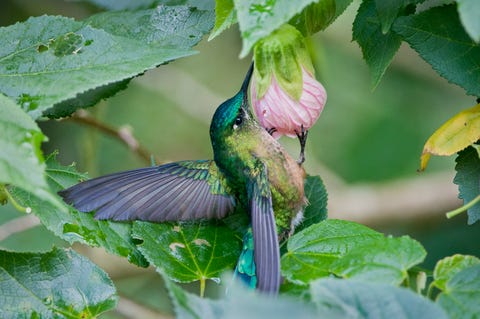
Despite their name, they don’t necessarily “hum.”
Hummers don’t produce musical sound. It’s more of a chatter, experts say. Some species even make these sounds with their tail feathers.
 GETTY IMAGES
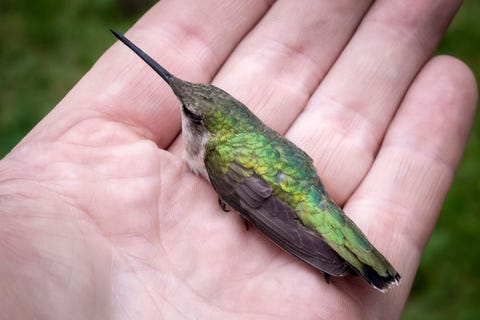
Hummers can really sleep.
Hummingbirds have an evolutionary adaptation that benefits them during cold nights, according to LeBaron. Torpor is a deep sleep similar to hibernation in which the metabolic rate drops as much as 95%. This lowers the body temperature so much that a torpid hummingbird maintains a hypothermic threshold that nears death. It takes them 20 minutes to an hour to wake up from this state.
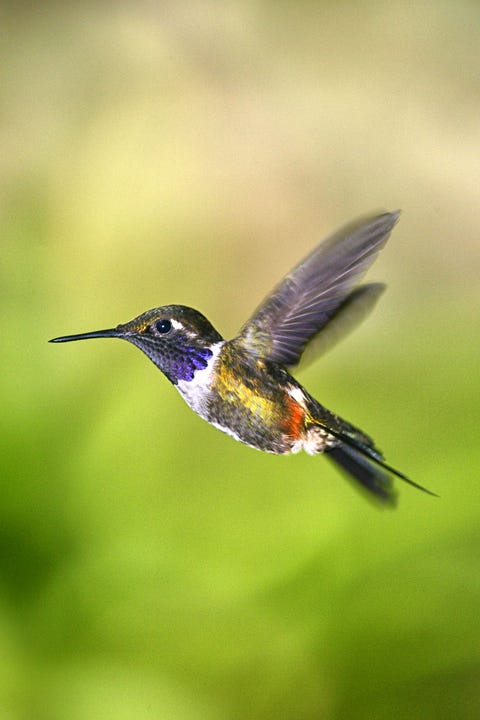
That means they can survive freezing temps.
People mistakenly worry about the cold when it comes to hummers, but it actually doesn’t pose much of a risk. Some hummingbirds breed in the Andes, where temperatures drop well below freezing. Come fall or winter, the food supply is the limiting factor, not the temperature.
 GETTY IMAGES
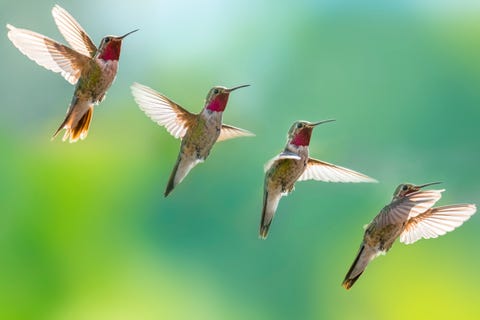
Hummers beat their wings thousands of times per minute.
Averaging about 50 times per second, hummers redefine the laws of flight. They hover over their food instead of landing. In fact, 25 to 30% of a hummingbird’s weight is in its pectoral muscles. Their near-invisible wings can propel them forward, backward, and upside down, says LeBaron.
 MLHARING//GETTY IMAGES
Hummers have over 900 feathers.
That may sound like a lot, but it’s actually the fewest amount out of any other bird species in the world. They don’t need heavy feathers weighing them down — this helps them fly not only easier, but faster.
 JEFF R CLOW//GETTY IMAGES
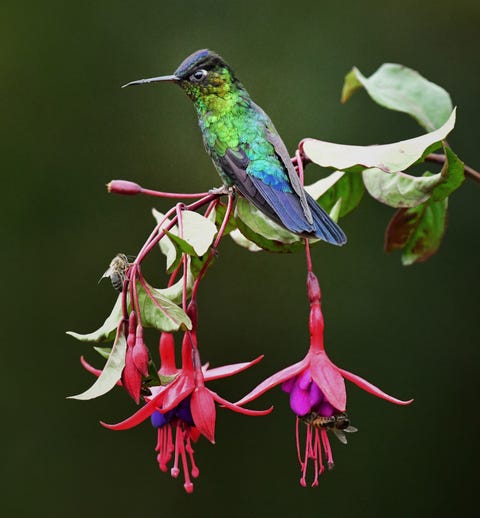
They can’t use their feet to walk or hop.
 GETTY IMAGES
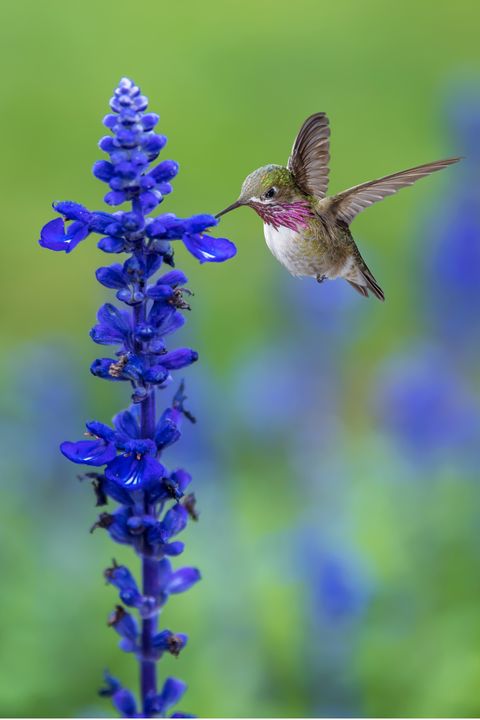
Their hearts thump up to 1,260 times per minute.
Relative to body size, this is, again, the most in nature. LeBaron says a hummer must stay in a nearly constant state of motion in order to survive.
 H .H. FOX PHOTOGRAPHY//GETTY IMAGES
 DEEPDESERTPHOTO//GETTY IMAGES
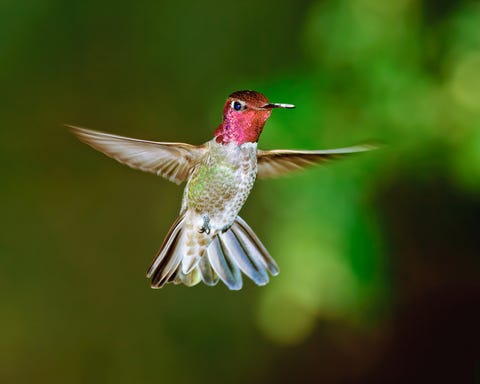
Their tongues have a groove in the shape of a “W.”
This helps them lap up nectar easier — almost like a cat.
 ROBERT BROWN//GETTY IMAGES
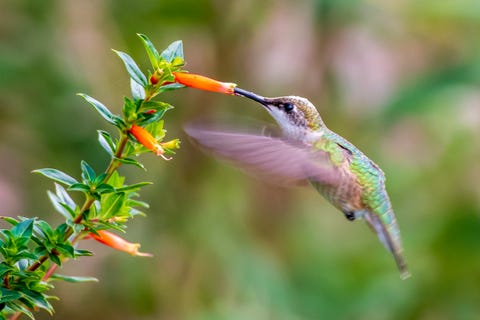
Their tongues have tiny hairs on them.
It’s a total myth that hummers sip nectar through a straw-like tongue. They actually flick their tongue 18 times per second, collecting the nectar and pulling it into their mouths. The hair-like extensions help make the process easier.
 JEAN LUC CHEVAL / 500PX//GETTY IMAGES
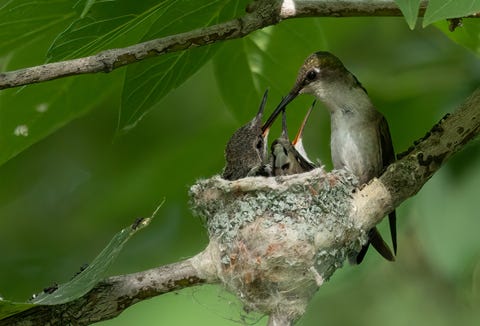
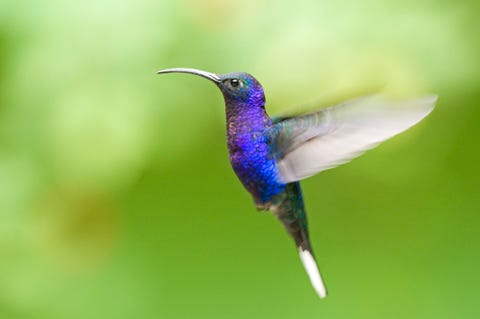
Their nests are super small.
Keep a close eye out for hummingbird nests, because they won’t be easy to spot. The average size is about the same as a half-dollar coin.
 RACOONBTC//GETTY IMAGES
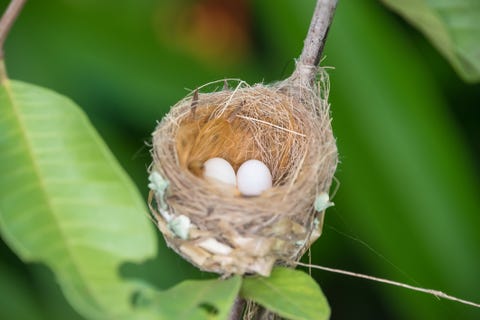
And their eggs are even smaller.
Hummers produce the smallest eggs in the world. They each weigh less than 1/50 of an ounce, and are often compared to the size of a jelly bean.
 GERARD SOURY//GETTY IMAGES
They use a surprising material for building nests.
Hummers use spiderwebs to help bind their nests together. The rest of the structure is mostly made from lichen and moss.
 NICOLAS REUSENS//GETTY IMAGES
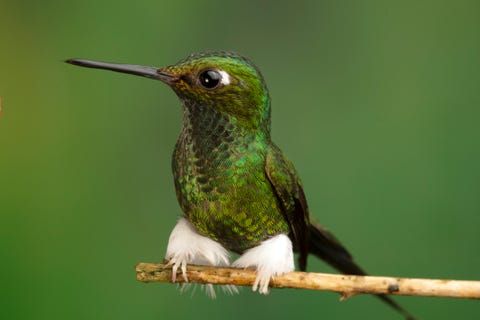
Their chest muscles account for much of their body weight.
Since their pectoral muscles are so critical for flying, they make up about 25 to 30% of the bird’s total weight.
 MARK NEWMAN//GETTY IMAGES
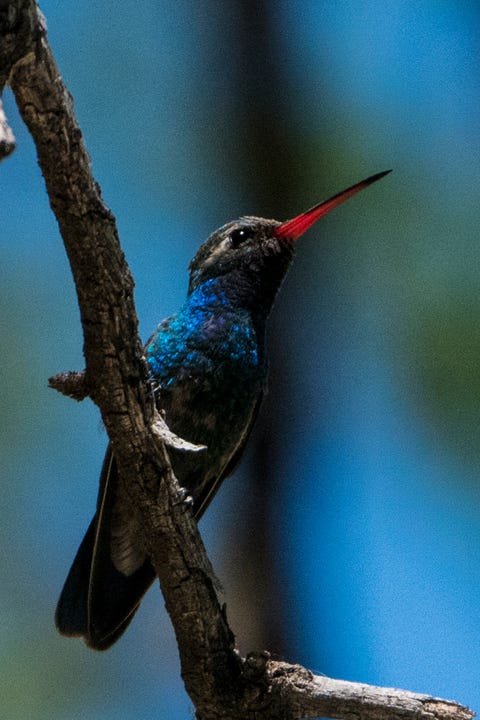
They have incredible vision.
Hummers see in ultraviolet light — and can see much further than humans.
 DANIEL RIPPLINGER / DANSPHOTOART//GETTY IMAGES
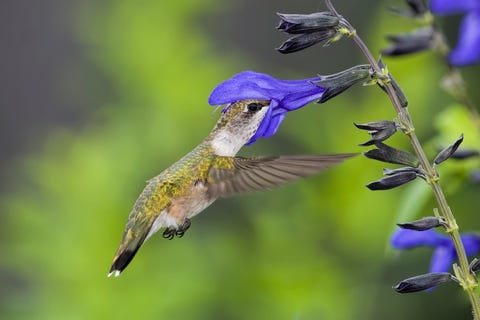
They have a sense of smell, too.
Contrary to popular belief, hummers can smell the environment around them just a little bit. They mainly use it to detect danger or predators lurking near flowers they’re hoping to collect nectar from.
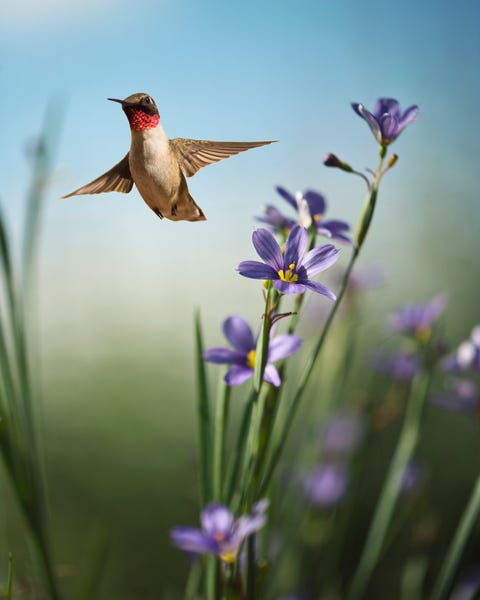 JODY TRAPPE PHOTOGRAPHY//GETTY IMAGES
Their average lifespan is about three to five years.
Other factors like species, habitat conditions, and predators can play a role in it. There have been instances where a hummer has lived much longer than five years as well.
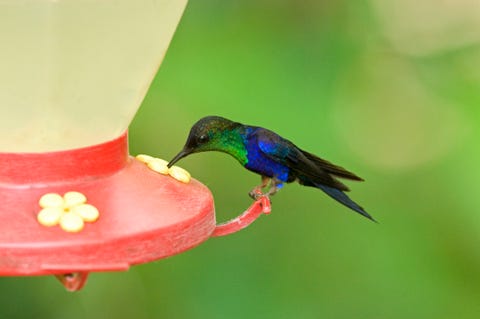 GERARD SOURY//GETTY IMAGES
Hummers do not mate for life.
The male hummer isn’t involved at all in the nesting or egg incubating process, and will continue to mate with others at the same time.
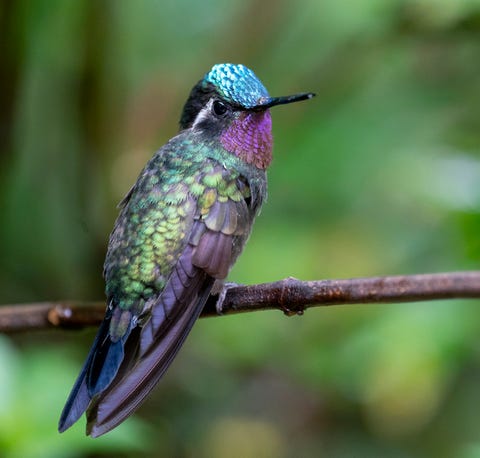 ALATOM//GETTY IMAGES
Hummers have a cool nickname.
They are often called “flying jewels.” This nickname started back when Spanish explorers visited the Americas for the first time and were wowed by the birds’ vibrant colors.
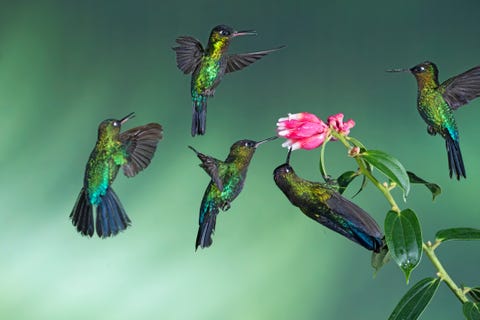 DORIT BAR-ZAKAY//GETTY IMAGES
A group of hummers is called a “charm.”
They may also be referred to as a bouquet, shimmer, or glittering. The perfect names for such small and unique birds!
 GETTY IMAGES
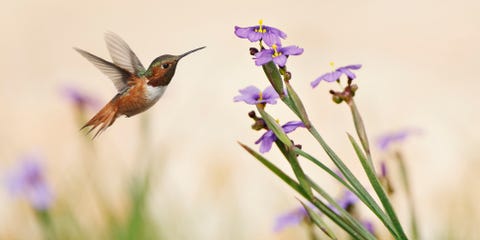
Observing hummers can help them.
Hummingbirds at Home, Audubon’s citizen-science program, aims to document natural nectar sources over the seasons. The 10- to 15-year project is recruiting people to identify what they are eating and how frequently they feed (as long as it’s coming from nature, not a feeder).
 GETTY IMAGES
There’s an app for identifying them.
If you’re looking for an easy way to ID your garden visitors, the Audubon Bird Guide is a free digital field guide app inclusive of over 800 species of birds (both male and female) in North America.
