13 Posts Sort By
Latest
Oldest
Google is complying with President Donald Trump’s executive action that renamed the Gulf of Mexico to the Gulf of America. Soon, the name change will appear on Google Maps.
In a post on X, Google explained that it has a “longstanding practice of applying name changes when they have been updated in official government sources.” The name will be tweaked when the Geographic Names Information System, a government database of names and location data, is updated.
Google will also change the name of Mount McKinley, the nation’s highest peak, from Denali. Former President Barack Obama renamed the Alaska landmark to Denali in 2015 as a nod to the region’s native population.
Both changes stem from an executive action that Trump signed shortly after taking office last week, saying the changes “honor American greatness.”
Read more details here about the name change.
General Motors CEO Mary Barra said she had a “long conversation” recently with President Donald Trump about the auto industry, placing a focus on its “importance from an economic security” and “national security perspective” as potential tariffs on Mexico and Canada loom.
Automakers are nervously awaiting more information about Trump’s tariff actions on America’s neighbors as car manufacturers have treated all of North America as a single free-trade zone. There is no such thing as an “all-American car,” because most American cars have parts made in Mexico or Canada.
“I’ve had the opportunity and actually had a long conversation with the president. We talked about the importance of American companies and, and manufacturing and a strong auto industry, and also, you know, the importance from an economic security perspective and a national security perspective,” she told CNBC.
“So it was a very productive conversation. I’m looking forward to working with President Trump’s administration as we move forward,” Barra said. “My sense is, is he wants to strengthen American manufacturing, not harm companies like General Motors, as we really provide a lot of good paying jobs in this country.”
Barra did not say precisely when she spoke with Trump, only that the conversation took place after he was inaugurated last week.
Trump said last week he intends to move forward with an across-the-board tariff of 25% on Mexican and Canadian goods, though he said those levies would come on February 1 rather than on Day One, as he previously said.
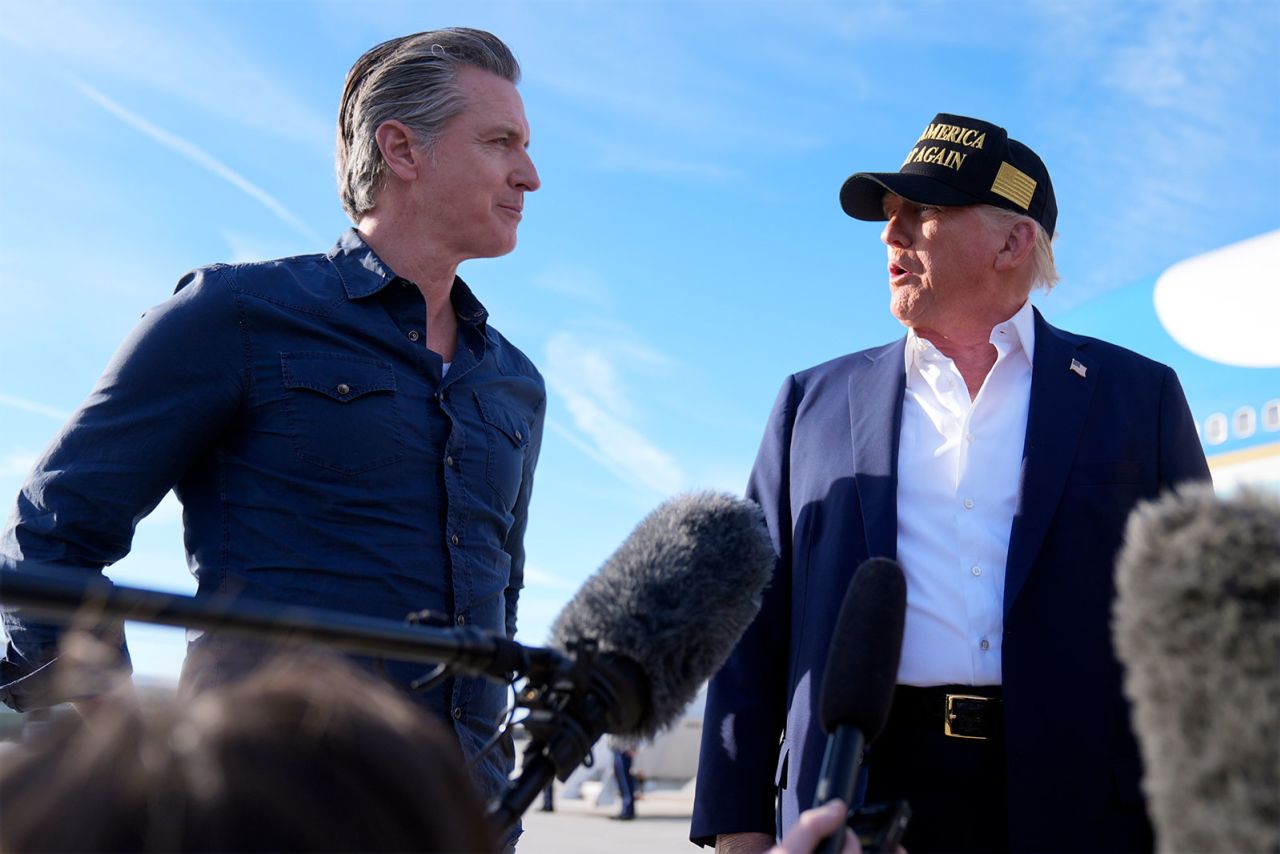
The US military did not enter California and “turned on the water,” as President Donald Trump claimed Monday night, state officials said. The federal government restarted water pumps that were offline for three days for routine maintenance.
In a late-night post on Truth Social, Trump said the US military used emergency powers to redirect water to California. “The United States Military just entered the Great State of California and, under Emergency Powers, turned on the water,” Trump wrote.
California Gov. Gavin Newsom’s spokesperson referred CNN to a Department of Water Resources post on X.
“The military did not enter California,” the state water department said. “The federal government restarted federal water pumps after they were offline for maintenance for three days. State water supplies in Southern California remain plentiful.”
Trump has continued to falsely imply Los Angeles lacked the water to put out the fires because Newsom wanted to protect an “essentially worthless fish called a smelt,” which is only found in Northern California.
Last Friday, Trump and Newsom had a face-to-face encounter when Newsom met Trump at Los Angeles International Airport, where Trump had just arrived to tour the wildfire damage.
“We’re looking to get something completed, and the way you get it completed is to work together,” Trump said.
CNN has reached out to the Pentagon and Army Corps of Engineers.
Bolstered by support from the Trump administration, Chicago US Immigration and Customs Enforcement teams are targeting criminals first in their immigration arrests, though the White House has left discretion about enforcement up to officers, the local field director said.
Officers are “targeting the worst first,” Chicago ICE Field Director Sam Olson told Fox News on Tuesday.
“We’re not targeting people in schools. We’re not targeting people in churches. We’re targeting people who are the worst,” he said. “You know, there’s a chance they’re going to go to some of those places, and this administration has kind of taken some of the handcuffs off of us, in a way, right? We’re leaving the discretion with our officers, and our officers are trained to make good decisions out there.”
The Trump administration has taken an “unprecedented, whole-of-government approach” to the operation, with on-the-ground support from the FBI, US Marshals and other agencies, Olson said.
His team has arrested people with “a litany of criminal convictions,” including sexual assault, murder and drug possession, he added.
“We’re in a difficult situation here in Chicago, because a lot of the targets that we’re looking at were previously arrested by local or state authorities, and we’ve placed holds on many of them, and they were released from the facility into the communities again,” Olson said.
Officers have spent hours researching where the people live live before going into their communities, he said, noting most teams are comprised of at least 10 agents trying to arrest one person.
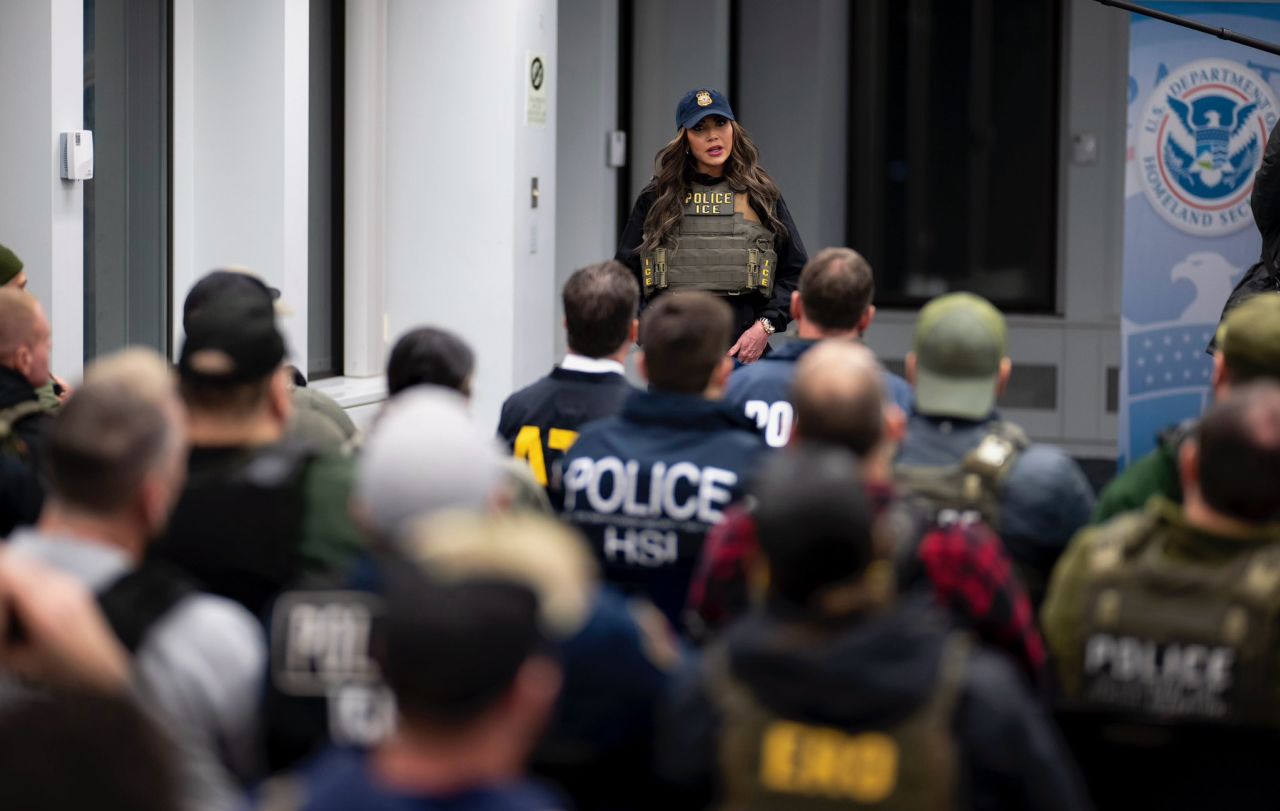
President Donald Trump’s new secretary of Homeland Security, Kristi Noem, joined federal law enforcement officers Tuesday as they made an arrest under the president’s strict new immigration agenda.
Noem posted photos of the early morning show of force, purporting to show Immigration and Customs Enforcement taking a man Noem said was in the country illegally into custody.
“Enforcement operation in NYC. Criminal alien with kidnapping, assault & burglary charges is now in custody – thanks to @ICE,” Noem posted. “Dirtbags like this will continue to be removed from our streets.”
Multiple federal departments took part in the operations, with the Drug Enforcement Administration in New York posting it was working with various law enforcement partners.
Three arrests have been conducted in the Bronx so far, including a man who had an Interpol warrant for homicide in the Dominican Republic, said DEA spokesperson Kenneth Heino. The teams are currently in the Bronx but more movement is likely, the spokesperson said.
A law enforcement source tells CNN the NYPD was not involved in any of the enforcement action being carried out Tuesday. CNN has reached out to the New York City mayor’s office and NYPD for more information.
The Trump administration’s immigration sweep has included more than 2,000 arrests in two days and has chilled many immigrant communities, with federal agencies releasing numerous photos over the weekend on social media of agents in tactical gear conducting purported immigration arrests.
Meanwhile, the House Oversight and Government Reform Committee has announced an investigation into the policies of so-called sanctuary cities Monday including New York, and invited the mayors of New York, Boston, Chicago and Denver to testify before Congress next month.
The Association of American Universities, which is composed of America’s 71 leading research universities, said Tuesday it is “still working to assess” the impact a pause on federal research funding would have on members after the White House budget office ordered a freeze on all federal grants and loans.
According to the Association of American Universities website, member universities “earn the majority of competitively awarded federal funding for research that improves public health, seeks to address national challenges, and contributes significantly to our economic strength, while educating and training tomorrow’s visionary leaders and innovators.”
Members include NYU, the University of Notre Dame, Stanford, the University of Texas, Georgia Tech, and many others.
The White House budget office has ordered a pause on all federal grants and loans, according to an internal memorandum sent Monday. The pause also blocks the issuance of new grants.
The freeze is slated to take effect at 5 p.m. Tuesday and could impact trillions of dollars. It marks the latest move by the Trump administration to exert control over federal funding, even that which has already been allocated by Congress.
Here’s what lawmakers have responded so far:
• Sen. Patty Murray of Washington state and Rep. Rosa DeLauro of Connecticut — the top Democratic appropriators in Congress — wrote to the White House on Monday night outlining their “extreme alarm” with the move. “The scope of what you are ordering is breathtaking, unprecedented, and will have devastating consequences across the country,” they said.
• Senate Minority Leader Chuck Schumer quickly criticized the move. “Congress approved these investments and they are not optional; they are the law,” the New York Democrat said. “These grants help people in red states and blue states, support families, help parents raise kids, and lead to stronger communities.”
An order issued Monday to “temporarily pause” all federal financial assistance programs to organizations could be devastating for charity groups that rely on government grants and loans, the head of the National Council on Nonprofits said.
“This order is a potential 5-alarm fire for nonprofits and the people and communities they serve,” council president and CEO Diane Yentel said in a statement Monday.“From pausing research on cures for childhood cancer to closing homeless shelters, halting food assistance, reducing safety from domestic violence, and shutting down suicide hotlines, the impact of even a short pause in funding could be devastating and cost lives.
“This order could decimate thousands of organizations and leave neighbors without the services they need.”
The memo to federal agencies issued by Matthew Vaeth, acting director of the White House Office of Management and Budget, orders the pause to go into effect at 5 p.m. ET Tuesday. During the pause, agencies are required to review all assistance programs and “assign responsibility and oversight to a senior political appointee to ensure Federal financial assistance conforms to Administration priorities.”
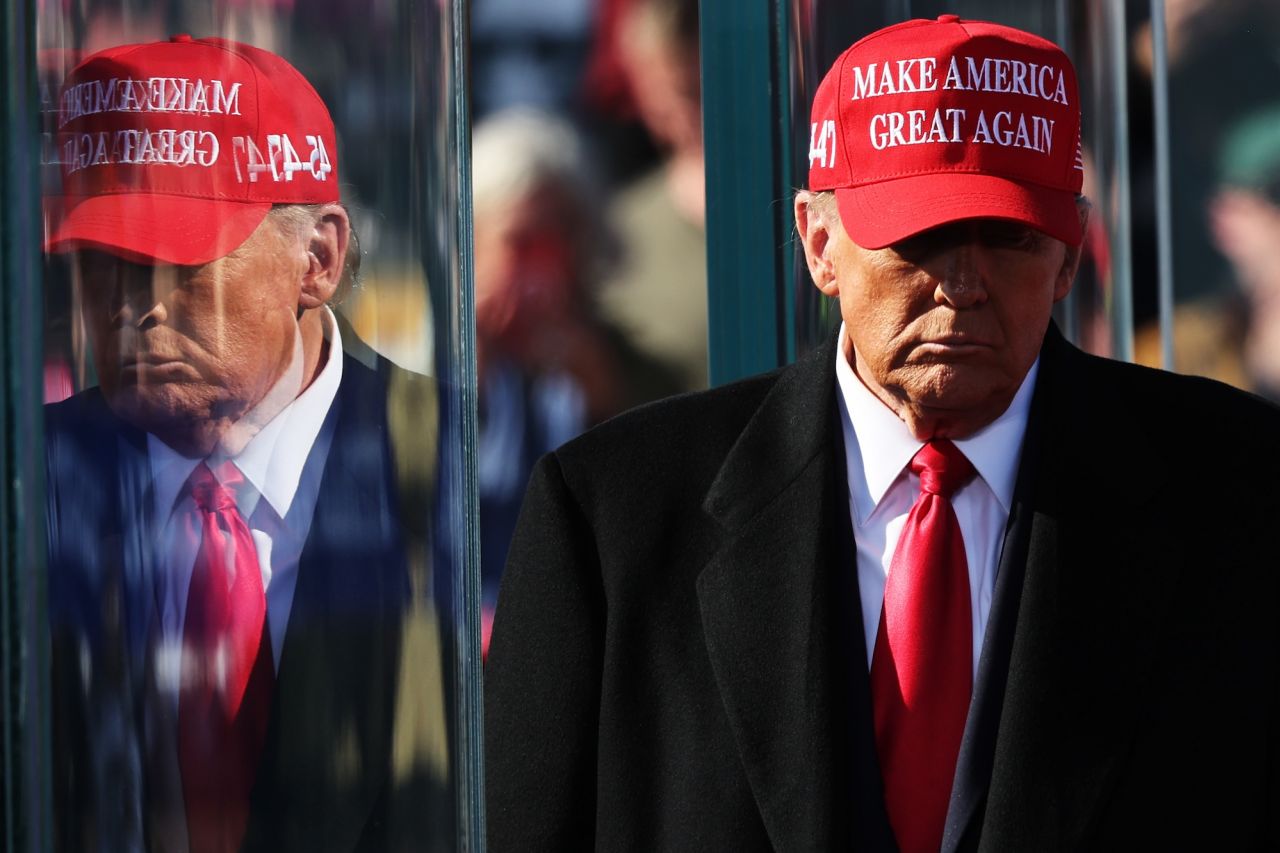
In August 2024, then-candidate former President Donald Trump delivered a press conference surrounded by packaged foods, meats, produce, condiments, milk and eggs.
“When I win, I will immediately bring prices down, starting on Day One,” he said.
It was a pledge he repeated on the campaign trail, often followed by the phrase, “drill, baby, drill.” And to many voters, inflation was a justifiable target: Years of sharply rising prices had taken a toll on their hard-earned pay and their livelihoods.
But Day One has turned into Day Seven, and those eggs are getting even more expensive.
Despite a flurry of executive actions, Trump’s price-related promises have gone unfulfilled, Democratic lawmakers wrote in a letter addressed to the president.
“You have instead focused on mass deportations and pardoning January 6 attackers, including those who assaulted Capitol police officers,” according to the letter signed by Sen. Elizabeth Warren and 20 congressional Democrats. “Your sole action on costs was an executive order that contained only the barest mention of food prices, and not a single specific policy to reduce them.”
In fact, the lawmakers added, Trump appears to be “backtracking” on those promises, conceding in recent weeks that it’s “hard to bring things down.”
Read more about why Trump has not been able to immediately lower prices here.
The White House budget office has ordered a pause on all federal grants and loans, according to an internal memorandum sent Monday.
Federal agencies “must temporarily pause all activities related to obligation or disbursement of all Federal financial assistance,” White House Office of Management and Budget acting director Matthew Vaeth said in the memorandum, a copy of which was obtained by CNN. The pause also blocks the issuance of new grants.
The memo specifies that the pause will not affect Social Security or Medicare benefits, nor does it include “assistance provided directly to individuals.”
The freeze on federal assistance is slated to take effect at 5 p.m. Tuesday and could impact trillions of dollars. It marks the latest move by the Trump administration to exert control over federal funding, even that which has already been allocated by Congress.
“This temporary pause will provide the Administration time to review agency programs and determine the best uses of the funding for those programs consistent with the law and the President’s priorities,” Vaeth wrote.
The memo suggests that the pause is in line with President Donald Trump’s executive orders last week.
The pause also applies to “other relevant agency activities that may be implicated by the executive orders, including, but not limited to, financial assistance for foreign aid, nongovernmental organizations, DEI, woke gender ideology, and the green new deal,” according to the memo.
“Career and political appointees in the Executive Branch have a duty to align Federal spending and action with the will of the American people as expressed through Presidential priorities,” Vaeth wrote.
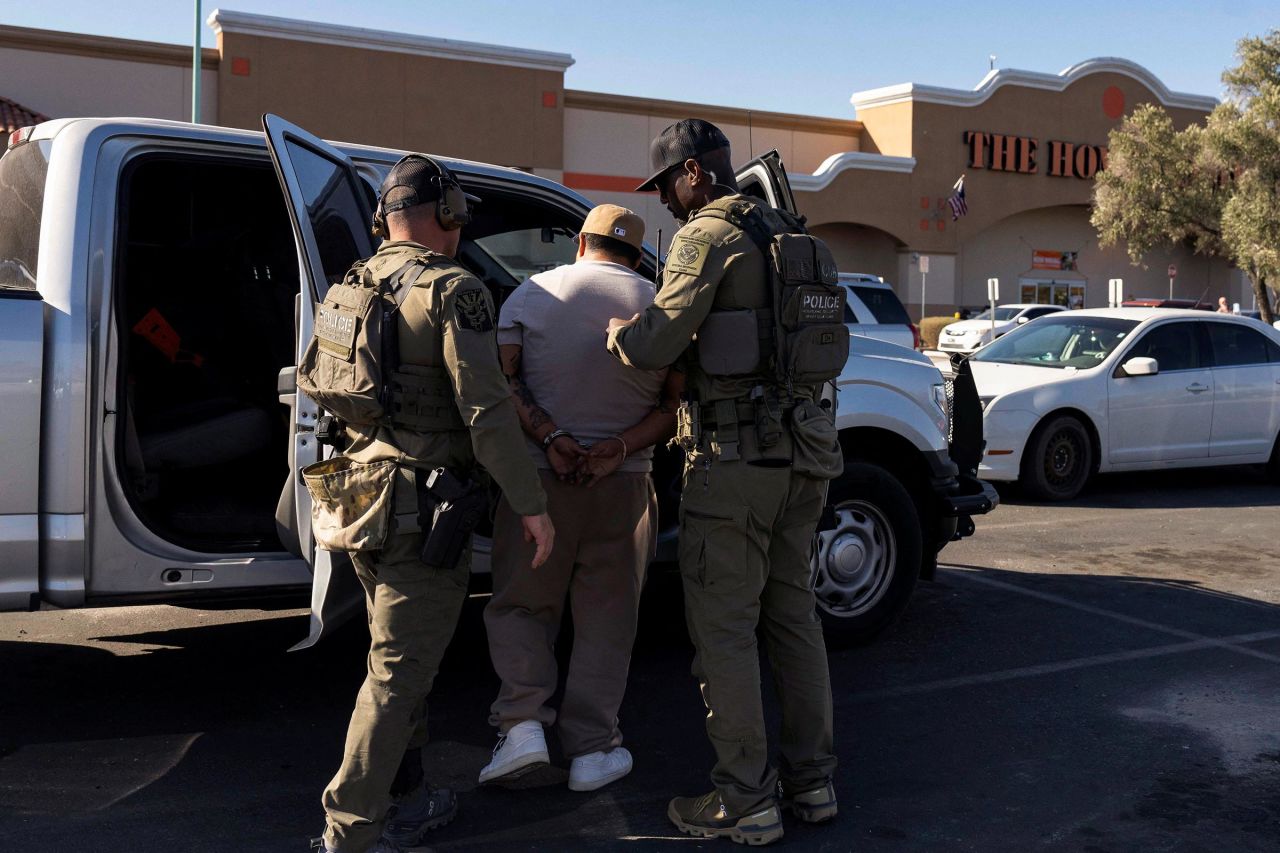
The Trump administration’s immigration enforcement blitz is underway, involving multiple federal agencies and resulted in the arrest of nearly 1,000 people, according to Immigration and Customs Enforcement.
Here’s the latest:
- Border czar speaks: The White House’s “border czar” said Monday he doesn’t have a number for how many undocumented immigrants he’d like the Trump administration to have deported by next year and that it will depend on Congress providing more money. “I don’t have a number. As many as we can arrest and deport,” Tom Homan told CNN’s Kaitlan Collins. “The more money we have, the more we can do,” he said.
- Deportees arriving in Colombia: Colombia’s president says the 110 citizens repatriated from the United States were expected to arrive last night. Colombia sent an Air Force plane to pick up the migrants in San Diego, the country’s foreign ministry said. A second Colombian Air Force jet arrived in El Paso, Texas, late Monday. Colombia reached an agreement on Sunday with the US to accept deported migrants, after a flurry of threats from Trump that included steep tariffs.
- Congressional support: House Speaker Mike Johnson said he backed Trump’s escalation of a trade war with Colombia over their opposition to migrant repatriation flights. At the House Republican’s policy retreat on Monday, he insisted that South American and Central American countries “must participate” in US efforts to send deported migrants back to their country of origin. “Every nation around the world needs to hear us loud and clearly, this is not a game,” Johnson said.
- In Washington state: Washington Gov. Bob Ferguson announced the formation of a new “rapid response” team in response to Trump’s immigration enforcement policies. The team, created through an executive order, will “consult with regional and local experts on immigration and child welfare” and “develop policies aimed at supporting children who experience family separation through the deportation or detention of their parents or caregivers,” according to a news release.
- In San Jose, California: Mayor Matt Mahan told CNN his city received an alert through the police department on Sunday that there were “targeted actions” happening in the community. He said these have not been unlike actions that happened under the Biden administration, but he argued that “enforcement alone isn’t going to solve this problem.”
Watch some of CNN’s interview with Trump’s border czar below:
@cnnPresident Trump’s border czar Tom Homan talks to CNN’s Kaitlan Collins about possible ICE operations to arrest and deport immigrants who are in the US illegally, and why he signed off on arrests being made in schools, hospitals and churches. #cnn #tomhoman #kaitlancollins
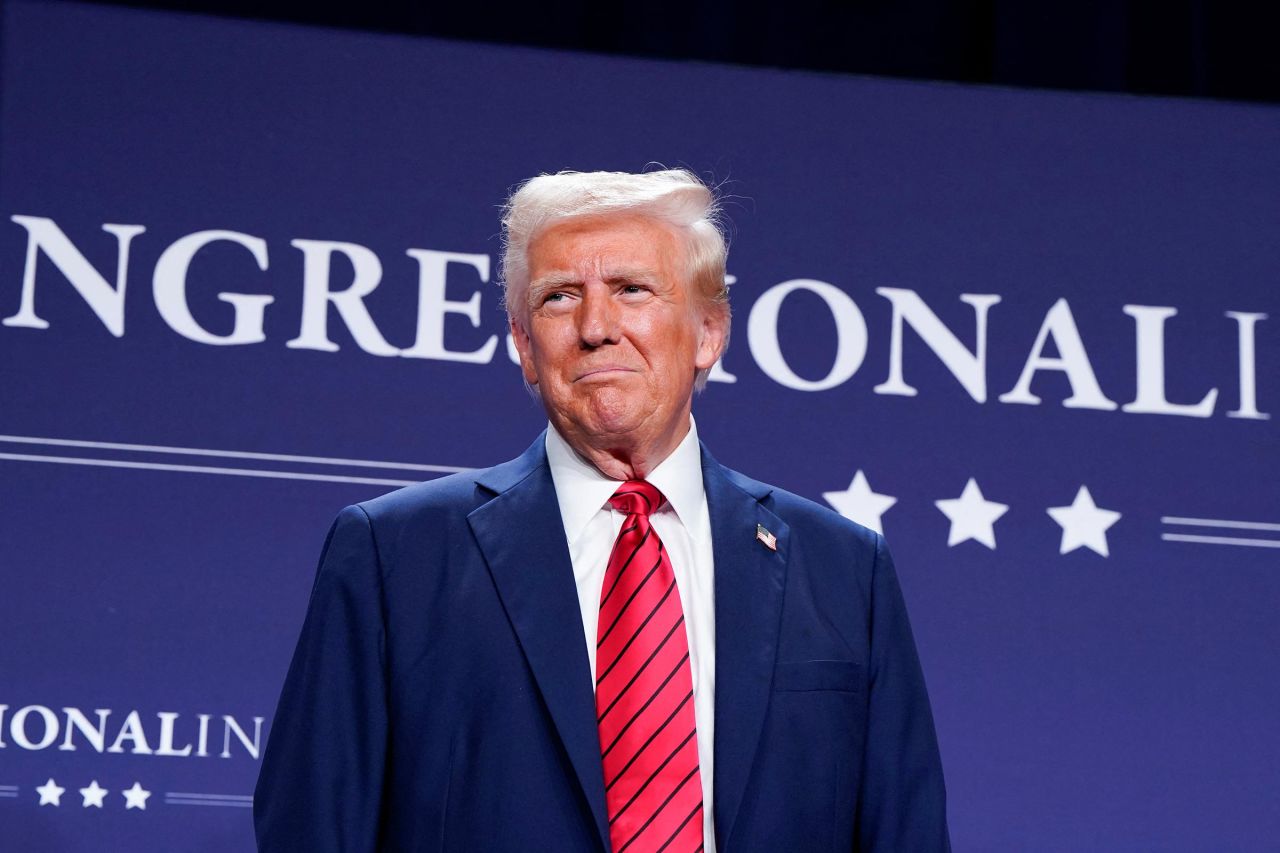
President Donald Trump said he wasn’t “100% sure” that he cannot run for a third term as president.
“I’ve raised a lot of money for the next race, that I assume I can’t use for myself, but I’m not 100% sure,” Trump said Monday at the House Republican Members Conference dinner in Doral, Florida.
He added a moment of lighthearted uncertainty, asking Speaker of the House Mike Johnson, “I’m not sure, am I allowed to run again, Mike? I better not get you involved in that.”
This is not the first time Trump has hinted at the possibility of seeking three terms in office. In an appearance last Sunday in Las Vegas, Nevada, he remarked, “It will be the greatest honor of my life to serve not once, but twice or three times,” further stoking speculation about his future political plans.
Some context: Republican Rep. Andy Ogles of Tennessee has spoken about amending the US Constitution to permit Trump to run for a third term. But it’s difficult to amend the Constitution, which hasn’t been changed since the 27th Amendment was ratified in 1992. Formally proposing an amendment requires either a two-thirds vote in the House of Representatives and Senate — Republicans do not hold enough seats to pass it — or via a constitutional convention, which hasn’t been held since the 18th century. Then, to ratify a new amendment, three-fourths of state legislatures (so 38 states) would need to approve it.
Here’s what else Trump spoke about at the conference dinner:
On TikTok: At the conference dinner, Trump reiterated his fondness for the app and his preference that it be sold by its Chinese-based parent company, ByteDance. “China won’t be involved,” he said while insisting “a lot of people” are seeking to purchase the platform.
On Medicare and Social Security: The president said he will not sign a bill that includes “even a single penny” of cuts to Medicare or Social Security benefits, reiterating a commitment he made during his campaign.
On Colombia: In his first comments on the mass deportation effort launched under his administration, Trump took a victory lap on immigration, saying Colombia, “agreed with us almost immediately after I got involved,” following a dispute over deportation flights over the weekend that threatened to spiral into a damaging trade war between the two nations.
On DeepSeek: After the Chinese artificial intelligence company unveiled a ChatGPT-like AI model operating at a fraction of the cost of comparable US models, Trump said the announcement “should be a wake-up call” for US tech companies.
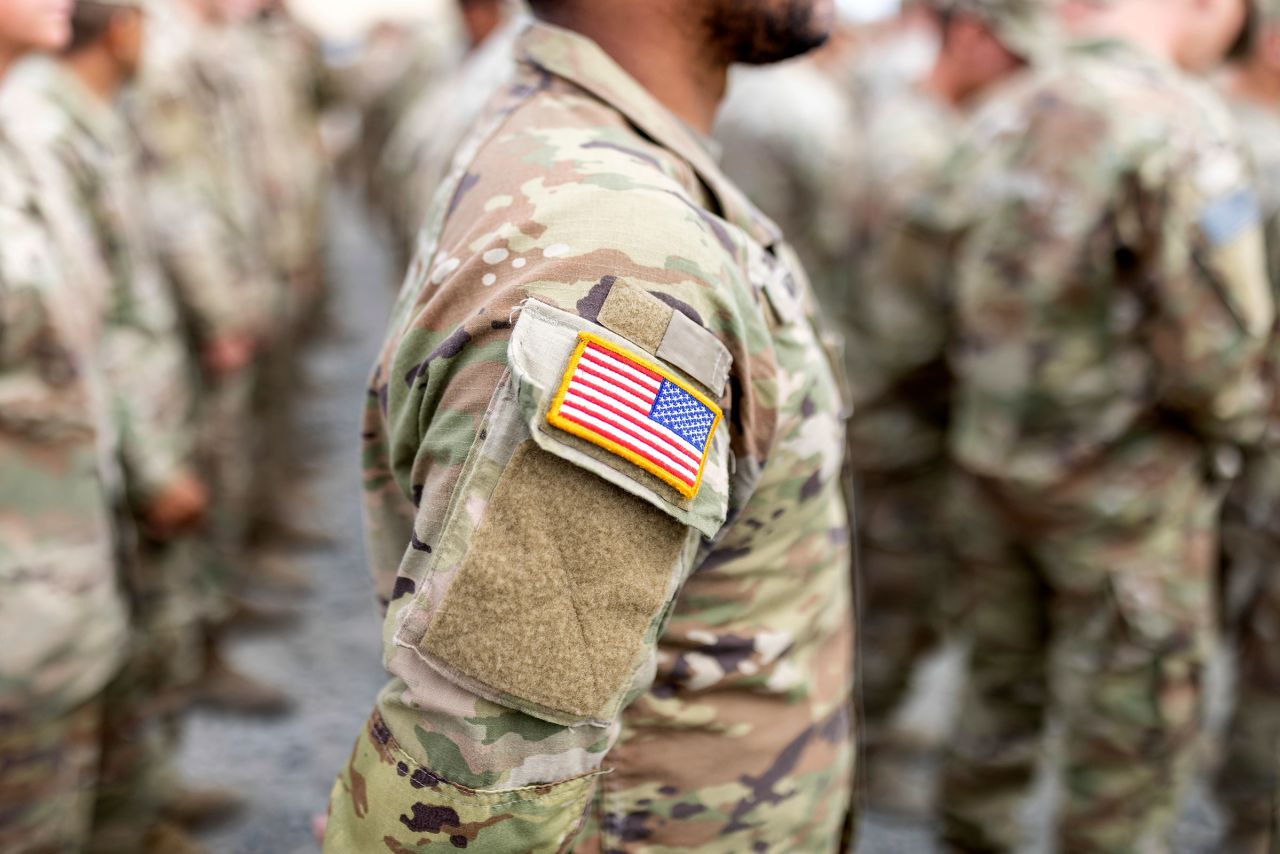
President Donald Trump on Monday announced he had signed four executive orders that will reshape the military, including banning transgender service members from serving in the US armed forces; gutting the military’s diversity, equity and inclusion programs; and reinstating with back pay service members who were discharged for refusing to get vaccinated from Covid-19.
Trump said he signed the executive orders while aboard Air Force One on a return flight to Washington from Florida. CNN previously reported Trump was expected to do so, according to two White House officials.
The orders, which were first reported by the New York Post, come as Trump’s nominee to lead the Pentagon, Pete Hegseth, was sworn in as secretary of defense on Saturday. Hegseth has long stated he planned to implement major cultural changes to the military, including ending DEI practices and removing “woke” service members.
Moments after his arrival at the Pentagon on Monday, Hegseth told reporters that there are “more executive orders coming.”
“Today, there are more executive orders coming, … on removing DEI inside the Pentagon, reinstating troops who were pushed out because of Covid mandates, iron dome for America — this is happening quickly, and as the secretary of defense, it’s an honor to salute smartly as I did as a junior officer and now as the secretary of defense to ensure these orders are complied with rapidly and quickly,” Hegseth said.
Trump had banned transgender Americans form serving in the military in 2017 during his first administration, but then-President Joe Biden issued an order in 2021 repealing the ban.
Read more about Trump’s executive orders here.
CNN’s Michael Williams and Alejandra Jaramillo contributed reporting to this post.

